For parents
Helping your child find their way to understanding.
Sometimes the hardest part is knowing how to begin. Bridgey helps them take the next step — and changes approach when progress stalls, without doing the work for them.
Designed for students who are capable—but need more time, better questions, and a patient guide.
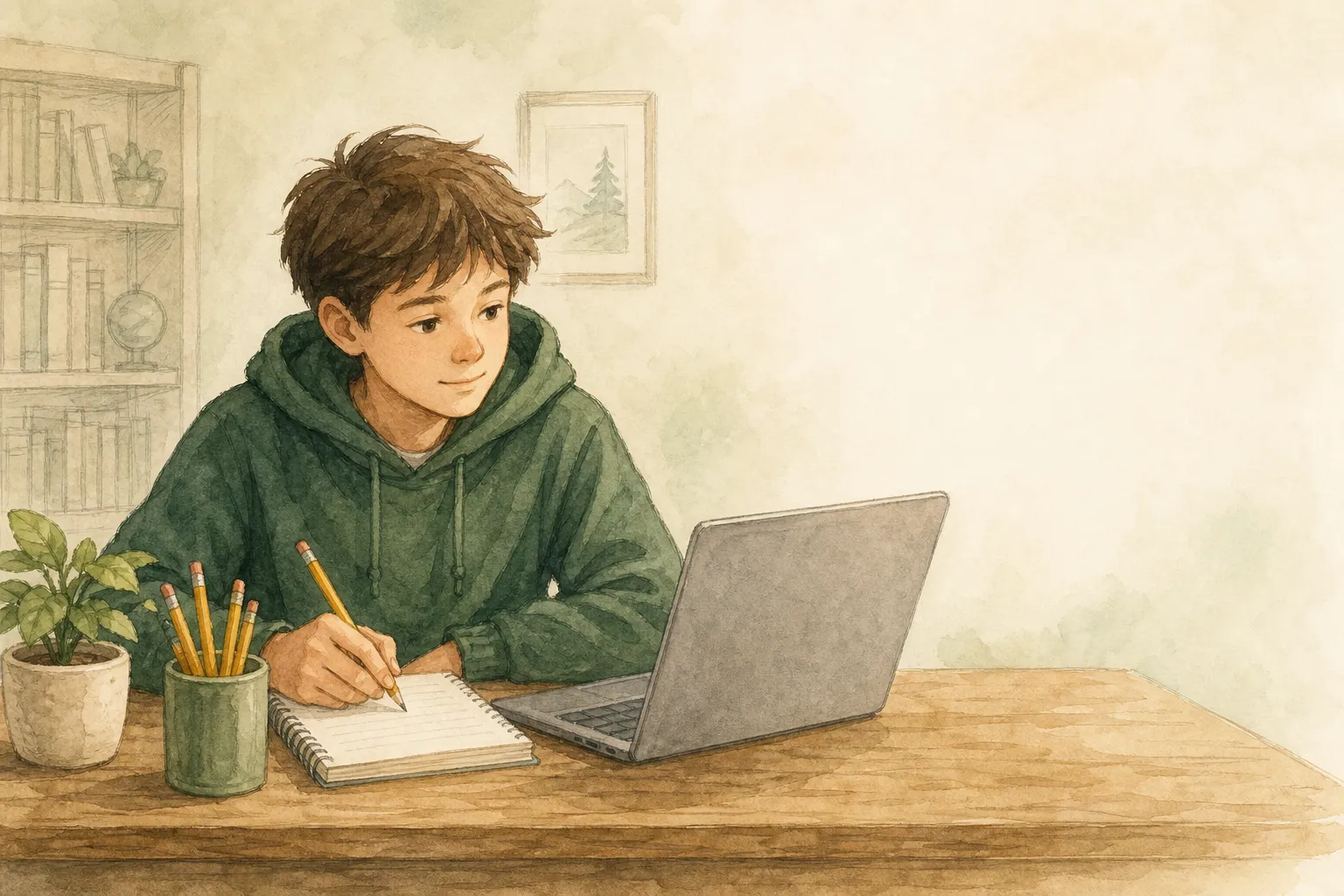
- Builds real understanding
Students think through problems instead of getting answers.
- Builds lasting confidence
Small wins and clear progress that sticks.
- Reduces frustration
Patient, encouraging guidance helps kids stay engaged.
- Encourages independence
Students learn how to learn—for school and beyond.
- Names the move
When something clicks, Bridgey names the move your child just made — in plain words — so they can catch how they did it.
Bridgey began with one student.
My son Judah was frustrated with homework.
Like a lot of parents, I wanted to help—but I also wanted him to learn, not just finish.
We tried working through it together, but the conversation became frustrating for both of us. I knew the answer wasn’t simply explaining more or giving him the solution.
He needed a different kind of guidance—something patient enough to ask questions, slow down, and help him find the next step.
So I started building the kind of guidance I wished we’d had that night.
What seemed to help.
I noticed something. When we slowed down, asked questions first, and focused on understanding instead of finishing, homework became less frustrating.
That approach looked like this:
- Meet students where they are.Start with what they already know — concrete, honest, one step at a time.
- Ask before explaining.Questions first. Independence over shortcuts.
- When they’re stuck, change approach.Don’t keep stacking the same kind of questions — try a different angle so they can take the next step themselves.
A different kind of homework conversation.
Bridgey asks questions to build understanding — and when the next step isn’t clear, it changes approach instead of handing over the answer.
Here’s that in practice:
Pick one detail from paragraph 3 of the article about urban gardens and explain how it supports the author’s claim that cities can grow food.
Sure, let's start there. What's one detail in paragraph 3 that catches your eye?
plants
Okay, plants is a good starting point — which specific plant does paragraph 3 actually name?
yeah
Good, so it does name one. What does the paragraph say about that plant — how much of it, or where it’s grown?
dunno
Let's try this a different way. Scan paragraph 3 just for a crop or plant name — you don't have to explain anything yet. When you spot it, type the name in the chat.
This question says “what was the author’s intent” and I hate that. How am I supposed to know what someone else was thinking? I don’t even know where to start.
Yeah — that kind of question is confusing. It’s not just you.
You’re right: you can’t actually read the author’s mind. That’s a fair point.
But they made choices on purpose. Every detail they put in is a clue they left behind. We’re not guessing — we’re being detectives.
Forget “intent” for a second. What literally happened in this part?
The main kid keeps getting left out at lunch. That’s all I see.
Okay. That’s exactly what happened — and that’s a solid place to start.
Why do you think the author kept showing that instead of saying it once?
…Maybe so you notice it’s a pattern?
Nice — that’s a strong observation.
See what we just did? We started with the facts, then asked why those facts were repeated. That’s how you get to what the author was trying to show — without pretending you can read their mind.
When something finally clicks.
Bridgey names the move your child just made — in their words, not textbook ones — so they can catch the how, not just the answer.
What can Bridgey help with?
Sometimes the hardest part isn’t solving the problem — it’s knowing how to begin.
The moments that show up at the kitchen table — including the ones that don’t fit neatly into a subject.
- Math homework
- Reading comprehension
- Essay writing
- Science concepts
- Study skills
Built by a parent.
Bridgey started because one homework conversation didn’t go the way I hoped.
Trying a different approach helped.
I wanted to see if it could help other families too.
Think Bridgey could help your child?
We’d love to learn more about your family and let you know when early access becomes available.